
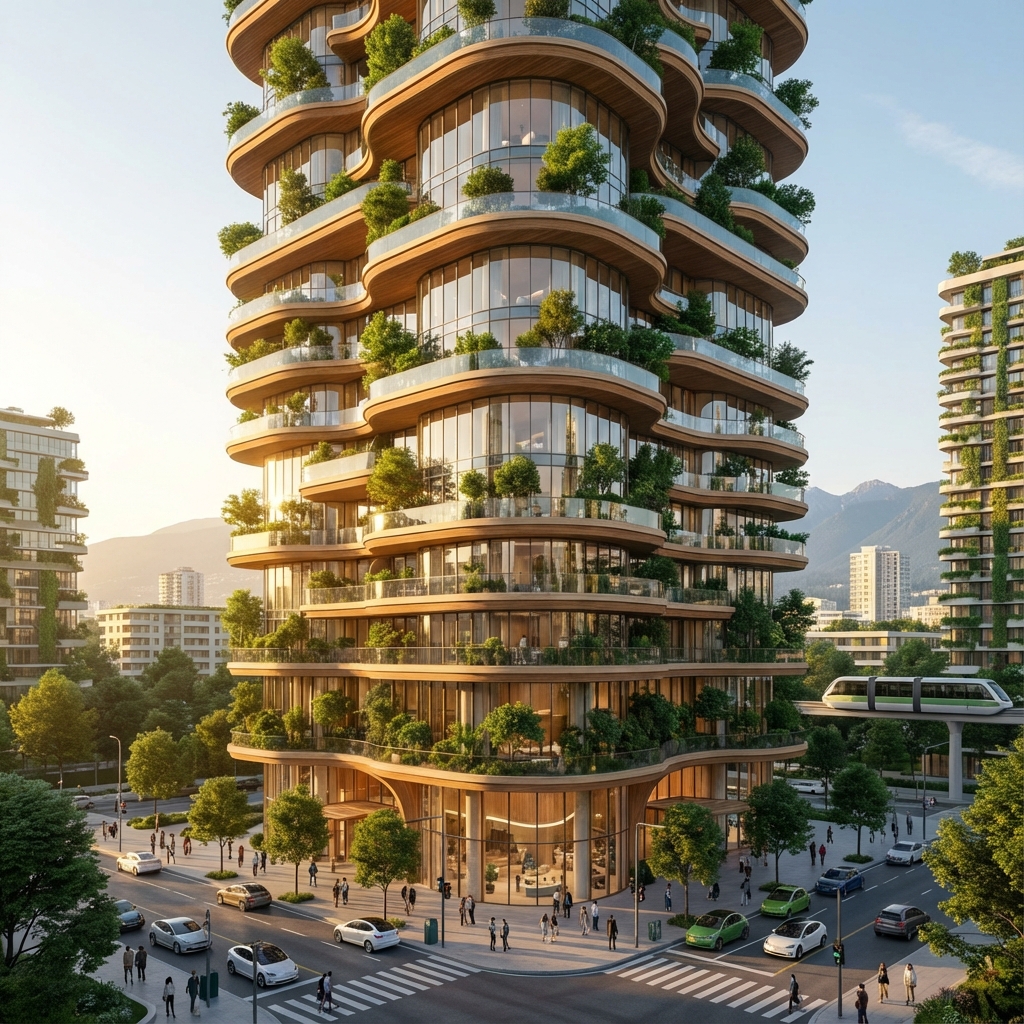
Biophilic Design: Integrating Nature into the Vertical Village
How architects are blurring the lines between the built environment and the natural world to create living breathing structures.
The concrete jungle is evolving. In a post-pandemic world, the craving for connection with nature has driven a paradigm shift in high-rise architecture. We are moving beyond potted plants on balconies to Biophilic Design—architecture that mimics the patterns, textures, and rhythms of nature. This is not merely an aesthetic choice; it is a fundamental rethinking of how we inhabit vertical spaces.
Leading architects in the NCR region are now treating the building envelope not as a barrier, but as a filter. The goal is to dissolve the boundary between the "built" and the "biological".
The Science of Harmony
Biophilia, the innate human tendency to seek connections with nature, is now backed by hard data. Research indicates that living in biophilic environments can reduce stress levels by up to 14% and improve creativity by 50%. For the high-net-worth individual, whose life is often defined by high-pressure decision-making, the home becomes a critical recovery zone.
Vertical Forests: More Than Just Aesthetics
The concept of the 'Vertical Forest', pioneered in Milan, is finding new expressions in Indian luxury real estate. These are eco-systems where:
- ✦ Microclimate Regulation: Dense vegetation on balconies acts as a thermal buffer, reducing the ambient temperature by 2-3 degrees celsius, significantly lowering air-conditioning loads.
- ✦ Acoustic Insulation: Foliage absorbs urban noise pollution, creating a cocoon of silence even in the heart of the city.
- ✦ Air Purification: Selected plant species actively filter out particulate matter (PM 2.5) and convert CO2 to oxygen, essentially turning the building into a giant air purifier.
Bringing the Outside In
True biophilic design extends to the interiors. It is about "Material Honesty". We are seeing a departure from high-gloss synthetics to materials that age gracefully:
- ✦ Raw Earth & Stone: Unpolished travertine, rammed earth walls, and slate floors that provide tactile grounding.
- ✦ Circadian Lighting: Advanced lighting systems that automatically adjust color temperature throughout the day to match the sun's cycle, regulating sleep patterns.
- ✦ Water Elements: Indoor reflection pools and water walls that not only manage humidity but provide a white-noise backdrop for focus and relaxation.
As we look to 2030, the "Green Building" certification will no longer be a differentiator but a baseline. The true luxury will lie in how deeply a home can reconnect its inhabitants with the natural world, even at 40 stories up.
Related Stories
View All
The Future of Luxury Living in Delhi NCR: Beyond 2025
Exploring the seismic shift towards sustainable, technology-integrated, and wellness-focused homes in India's most prestigious postcodes.

The Art of Minimalism in Modern Architecture
How 'less is more' is redefining opulent spaces, creating sanctuaries of calm in a chaotic world.

Emerging Investment Hotspots: NCR's Next Goldmines
A curated analysis of high-growth potential corridors emerging across the National Capital Region for the perceptive investor.